











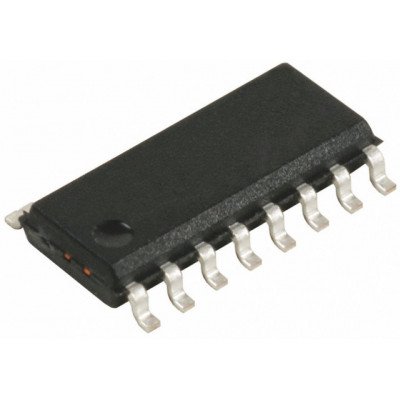
74LS258 IC – (SMD Package) 3-State Quad 2-Input Multiplexer IC (74258 IC)
The 74LS258 are Quad 2-Input Multiplexers with 3-state outputs. Four bits of data from two sources can be selected using a Common Data Select input. The four outputs present the selected data in true (non-inverted) form. The outputs may be switched to a high impedance state with a HIGH on the common Output Enable (EO) Input, allowing the outputs to interface directly with bus oriented systems.
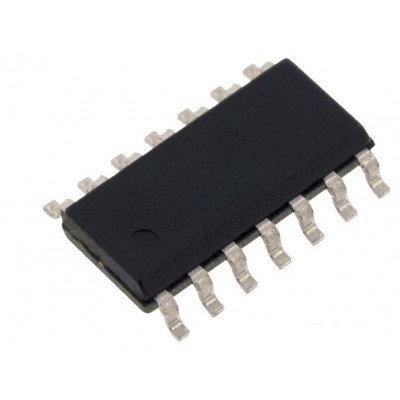
74LS26 IC – (SMD Package) Quad 2-Input High Voltage Interface Positive NAND-Gate IC (7426 IC)
This device contains four independent gates each of which performs the logic NAND function. The open-collector outputs require external pull-up resistors for proper logical operation. These gates feature high-voltage output ratings (up to 15V) for interfacing with 12V systems. Although the outputs are rated for 15V, the device supply is still rated for 5V
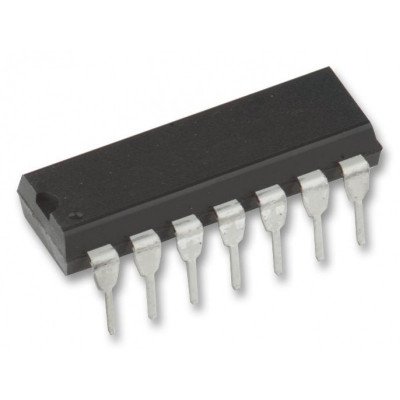
74LS26 Quad 2-Input High-Voltage Interface Positive NAND-Gate IC (7426 IC) DIP-14 Package
This device contains four independent gates each of which performs the logic NAND function. The open-collector outputs require external pull-up resistors for proper logical operation. These gates feature high-voltage output ratings (up to 15V) for interfacing with 12V systems. Although the outputs are rated for 15V, the device supply is still rated for 5V
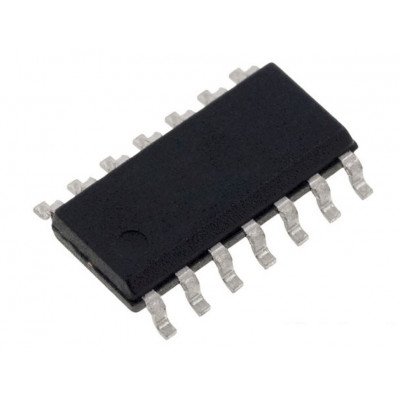

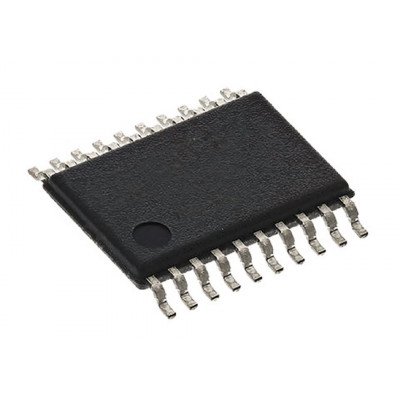
74LS273 IC – (SMD Package) Octal D-type Flip-Flop with Reset IC (74273 IC)
These monolithic, positive-edge-triggered flipflops utilize TTL circuitry to implement D-type flip-flop logic with a direct clear input. Information at the D inputs meeting the setup time requirements is transferred to the Q outputs on the positive-going edge of the clock pulse. Clock triggering occurs at a particular voltage level and is not directly related to the transition time of the positive-going pulse. When the clock input is at either the high or low level, the D input signal has no effect ar the output. These flip-flops are guaranteed to respond to clock frequencies ranging form 0 to 30 megahertz while maximum clock frequency is typically 40 megahertz. Typical power dissipation is 39 milliwatts per flip-flop for the ?273 and 10 milliwatts for the ?LS273.
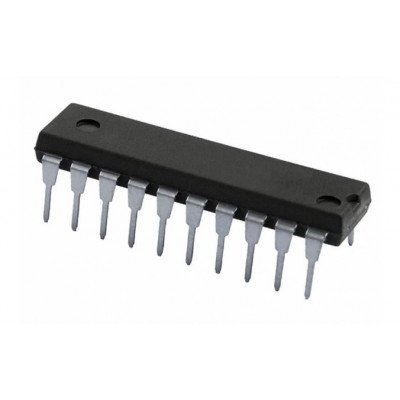
74LS273 Octal D-type Flip-Flop with Reset IC (74273) DIP-20 Package
These monolithic, positive-edge-triggered flipflops utilize TTL circuitry to implement D-type flip-flop logic with a direct clear input. Information at the D inputs meeting the setup time requirements is transferred to the Q outputs on the positive-going edge of the clock pulse. Clock triggering occurs at a particular voltage level and is not directly related to the transition time of the positive-going pulse. When the clock input is at either the high or low level, the D input signal has no effect ar the output. These flip-flops are guaranteed to respond to clock frequencies ranging form 0 to 30 megahertz while maximum clock frequency is typically 40 megahertz. Typical power dissipation is 39 milliwatts per flip-flop for the ?273 and 10 milliwatts for the ?LS273.
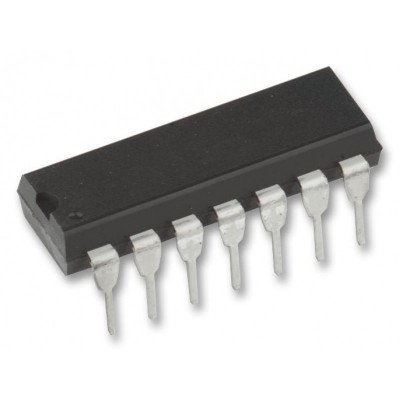
74LS280 9-Bit Odd-Even Parity Generator Checker IC (74280) DIP-14 Package
The 74LS280 IC designed as a Universal 9-Bit Parity Generator /Checker. These IC provides odd/ even outputs to facilitate either odd or even parity. By cascading, the word length is easily expanded. The 74LS280 IC operates at a wide range of working voltage, a wide range of working conditions. And directly interfaces with CMOS, NMOS, and TTL. The output of the IC always comes in TTL which makes it quite easy to function with other TTL devices and microcontrollers. The IC 74LS280 comes as smaller in size and offers much faster speed which makes it highly reliable in every kind of device.

74LS280 IC – (SMD Package) 9-Bit Odd-Even Parity Generator Checker IC (74280 IC)
The 74LS280 IC designed as a Universal 9-Bit Parity Generator /Checker. These IC provides odd/ even outputs to facilitate either odd or even parity. By cascading, the word length is easily expanded. The 74LS280 IC operates at a wide range of working voltage, a wide range of working conditions. And directly interfaces with CMOS, NMOS, and TTL. The output of the IC always comes in TTL which makes it quite easy to function with other TTL devices and microcontrollers. The IC 74LS280 comes as smaller in size and offers much faster speed which makes it highly reliable in every kind of device.
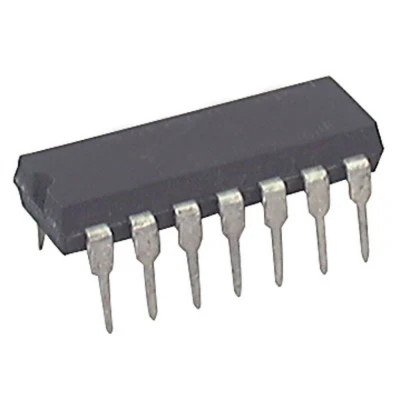
74LS290 4-Bit Binary Ripple Counter IC (74290) DIP-14 Package
The 74LS290 are high-speed 4-bit ripple type counters partitioned into two sections. Each counter has a divide-by-two section and either a divide-by-five (LS290) or divide-by-eight (LS293) section which are triggered by a HIGH-to-LOW transition on the clock inputs. Each section can be used separately or tied together (Q to CP)to form BCD, Bi-quinary, or Modulo-16 counters. Both of the counters have a 2-input gated Master Reset (Clear), and the LS290 also has a 2-input gated Master Set (Preset 9).
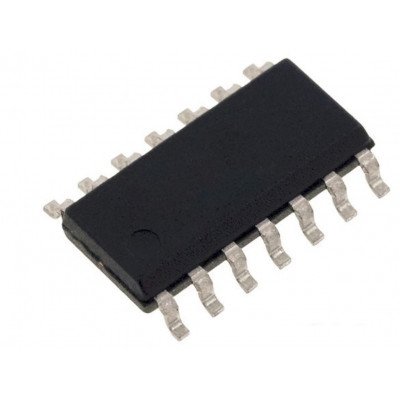
74LS290 IC – (SMD Package) 4-Bit Binary Ripple Counter IC (74290 IC)
The 74LS290 are high-speed 4-bit ripple type counters partitioned into two sections. Each counter has a divide-by-two section and either a divide-by-five (LS290) or divide-by-eight (LS293) section which are triggered by a HIGH-to-LOW transition on the clock inputs. Each section can be used separately or tied together (Q to CP)to form BCD, Bi-quinary, or Modulo-16 counters. Both of the counters have a 2-input gated Master Reset (Clear), and the LS290 also has a 2-input gated Master Set (Preset 9).
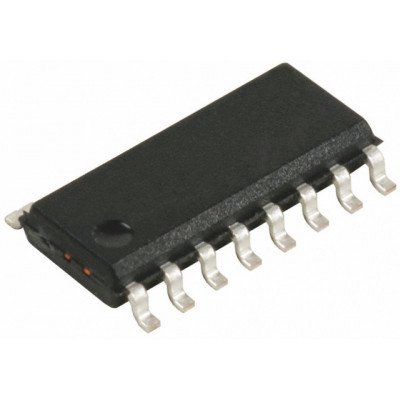
74LS298 IC – (SMD Package) Quad 2-Input Multiplexer IC (74298 IC)
The 74LS298 is a Quad 2-Port Register. It is the logical equivalent of a quad 2-input multiplexer followed by a quad 4-bit edge-triggered register. A Common Select input selects between two 4-bit input ports (data sources.) The selected data is transferred to the output register synchronous with the HIGH to LOW transition of the
 Boards & Modules
 ARM Microcontroller
 AVR Microcontroller Board
 Arduino boards
 Advance Development Boards
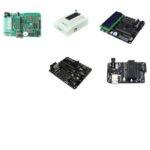 8051 Development Board
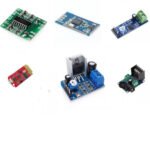 Audio Amplifier Module
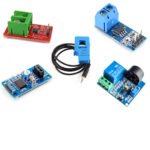 Current & Volatage Sensor
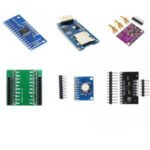 Breakout Board
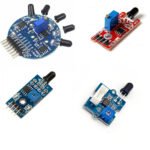 Flame Sensors
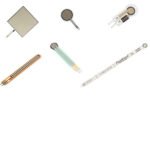 Force Sensor
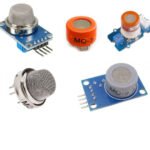 Gas Sensors
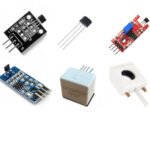 Hall Effect Sensor
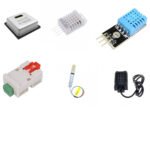 Humidity & Temperature Sensor
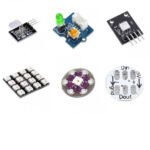 LED Module
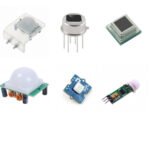 PIR Sensor
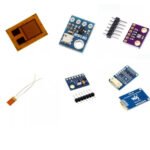 Pressure Sensors
 Proximity Sensor
 Relay Module
 Real Time Clock (RTC) Module
 Touch Sensor
 Ultrasonic Sensor
 Water Level & Water Flow Sensor
 Weighing Scale Sensor



 Ai Thinker ESp Wifi Module
 Pic Devlopment Board & programmer
 Led lights & Strips
 PCBs & Breadboard
 Potentiometer
 Power Transistors
 Resistor & Smd & inductor
 Switches
 Aluminium Heat Sink
 Buzzer & Speaker
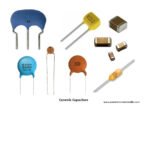 capacitor
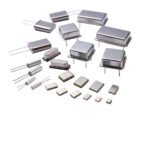 Crystal Oscillators
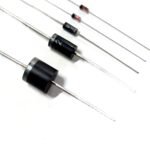 Doides
 Electric Fuses
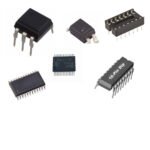 ICs & Dips
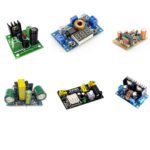 Power supply module
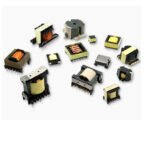 Transformer
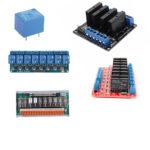 Relay Module
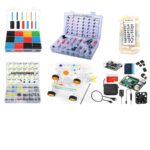 Kits
Kits Magnet
 RF Connectors
 PCT and DC Connectors
 Wires & Heat Shrink
 FFC, FPC, Berg connectors
 Nextion
 Segment
 Seedstudio
 Waveshare
 E Bike Batteries
 E bike Battery Case
 E bike Connectors
 E bike Display
 E bike Kit
 E bike Motors & Controllers
 Electronics Accessories
 Mechanical Accessories
 Display
 Cameras